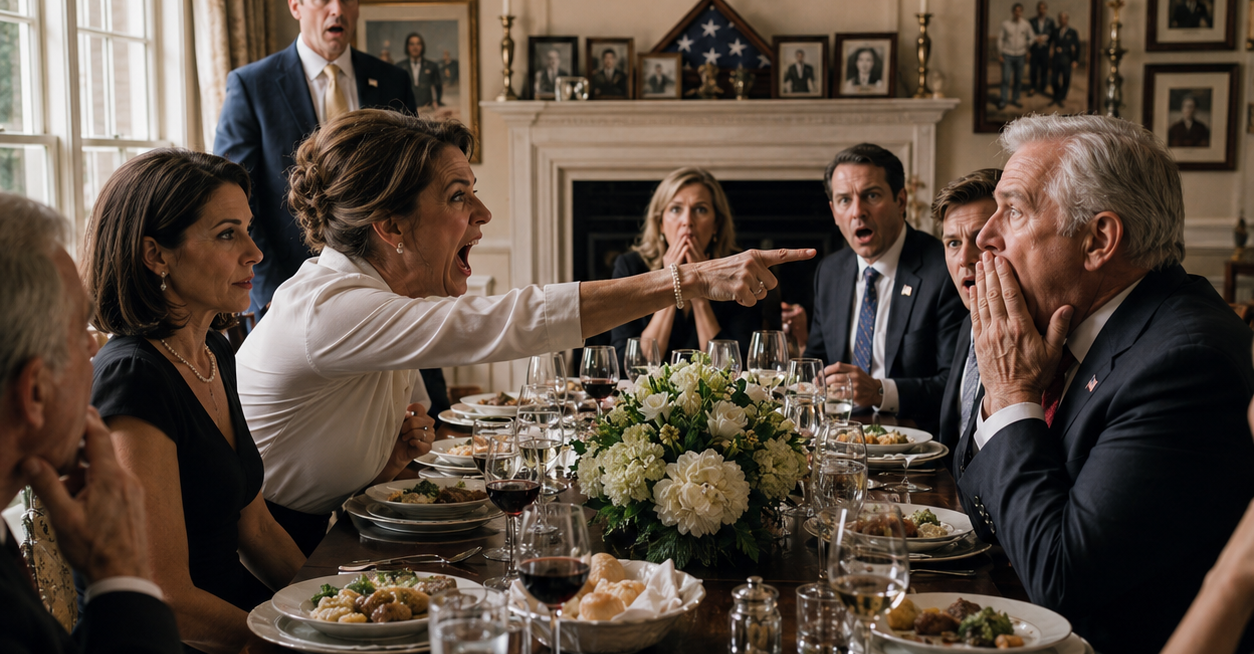

“Have You Ever Shot Anyone?” My Cousin Laughed. I Smiled: “Only The Ones Who Shot First.” The Whole Table Laughed. “Cute. What’s Your Call Sign?” — “Reaper,” I Said. A Retired Navy SEAL Choked On His Drink. He Knew Exactly Who I Was.
### Part 1
The retired Navy SEAL nearly dropped his glass when I said one word.
Reaper.
Ice rattled against the side of his tumbler. Water jumped over the rim and splashed across the white linen tablecloth my grandmother had ironed that morning. A fork clinked against a plate. Somebody’s laugh died halfway out of their mouth.
My cousin Preston was still grinning when everyone else stopped.
He had asked the question as a joke, of course. Preston Shaw did everything as a joke, as long as the joke landed on someone else’s ribs.
“Have you ever shot anyone?” he had said, leaning back beneath the string lights with a beer in one hand and that country-club smirk of his. “Come on, Nora. You were military for twenty years. Give us one good story.”
I had taken a slow sip of iced tea. The glass was sweating in my hand. Beyond the long dinner table, the Idaho hills glowed dark blue under the last stripe of sunset. My grandparents’ ranch smelled like grilled steak, dry grass, sunscreen, and the peach cobbler cooling near the kitchen window.
“Only the ones who shot first,” I said.
The family exploded with laughter.
Preston slapped the table. My aunt Sharon covered her mouth like she was scandalized and delighted at the same time. My younger cousins howled. Even my mother gave a small nervous smile, the kind she used when she wanted me to play along and not make things uncomfortable.
Then Preston leaned forward.
“What was your call sign?” he asked. “Don’t all you secret desk warriors get one?”
That was how he saw me. That was how most of them saw me.
Nora Whitaker. The quiet one. The one who left home at eighteen, joined the Army, missed weddings, missed reunions, missed funerals, then came back every few years with short hair, tired eyes, and no stories.
They thought I had spent two decades behind a desk somewhere, stamping forms and making coffee for generals.
I could have let it pass. I usually did.
But my grandfather was sitting at the head of the table, turning seventy-five, wearing his best pearl-snap shirt, watching me with those clear blue eyes that had never once demanded more from me than I could give. He had never mocked my silences. Never pushed. Never called my life an excuse.
So I answered.
“Reaper.”
The laughter vanished.
Not because my family understood the word. They didn’t. They just followed the sound of Cal Mercer choking on his drink.
Cal sat three chairs down from Grandpa. He was broad even in old age, with silver hair cut close and hands that looked like they still remembered how to break down a rifle in the dark. He was one of Grandpa’s oldest friends, a retired Navy SEAL who came by the ranch twice a month to fix fences, drink bad coffee, and pretend his knees didn’t hurt.
His face had gone pale.
Not surprised.
Recognizing.
He stared at me as if I had stepped out of a radio transmission from another lifetime.
Preston laughed once, uncertain now. “You okay, Cal?”
Cal didn’t answer him.
“What did you say?” he asked me.
The table went still.
I set down my tea. “Reaper.”
Cal’s fingers tightened around his glass.
“My God,” he whispered.
A strange cold moved across my skin, though the evening was warm. I knew that look. I had seen it in men who survived things they weren’t supposed to survive. Men who heard a name years later and were suddenly back in dust, smoke, and bad light.
Preston looked from Cal to me, his grin slowly returning because he smelled entertainment.
“Wait,” he said. “Do you two know each other?”
“No,” I said.
Cal’s eyes never left mine. “Not by face.”
Nobody spoke after that. Not for a long moment.
Then my grandmother, trying to rescue the birthday dinner, asked who wanted more cobbler. Forks moved. Chairs creaked. People started talking again, too loudly, too quickly, like noise could cover whatever had just happened.
But Cal kept looking at me.
And Preston kept looking at both of us.
Later, when the dishes were stacked and the kids were running through the yard with glow sticks, I slipped out onto the back porch. The boards were cool beneath my boots. Crickets sang in the pasture. The mountains sat black against a sky full of stars.
I heard the door open behind me.
Cal stepped out.
For a while, he just stood beside me with both hands on the railing.
Then he said, very quietly, “You were the voice.”
My chest tightened.
I did not answer.
He turned toward me, and his eyes were wet.
“You were the voice that brought us home.”
Behind us, near the corner of the house, a floorboard creaked.
Cal heard it too.
I looked over my shoulder just in time to see Preston’s shadow move away from the porch.
And I knew, with the tired certainty of a woman who had survived worse men than him, that my cousin had heard just enough to become dangerous.
### Part 2
Cal did not chase him.
Neither did I.
People like Preston wanted pursuit. They wanted drama, doors thrown open, voices raised, accusations flying in front of an audience. If you gave them that, they turned themselves into victims before you finished your first sentence.
So I stayed on the porch.
Cal stayed beside me.
The kitchen windows glowed yellow behind us. Inside, I could hear my grandmother laughing at something one of the children said. A drawer slid open. Plates clattered. Normal sounds. Safe sounds.
Cal leaned both elbows on the railing and stared toward the dark pasture.
“How much did he hear?” he asked.
“Enough to misuse.”
His jaw flexed. “I’m sorry.”
“For what?”
“For saying it out loud.”
I looked at him then. In the dim porch light, the old SEAL seemed carved out of weathered stone and regret. “You didn’t do anything wrong.”
He gave a short laugh without humor. “That depends who asks.”
The screen door rattled in the breeze. Somewhere out by the barn, a horse stamped once.
Cal lowered his voice. “I never knew your real name.”
“That was the point.”
“We asked.”
“I know.”
His head turned sharply.
I shrugged. “Requests came through. They were denied.”
“For twenty years, I thought Reaper was a man.”
“Most people did.”
He gave me a look. “You find that funny?”
“No. Useful.”
That was the truth. Back then, useful mattered more than fair. Useful kept people alive. Useful got you into rooms where nobody expected a woman with a calm voice and a plain face to make decisions that moved aircraft, opened corridors, redirected teams, and changed the shape of a battlefield.
Cal rubbed the heel of his hand over his eyes.
“It was northern Afghanistan,” he said.
My fingers tightened on the porch rail.
“Late October,” he continued. “Bad weather. Bad intel. Bad luck.”
“Cal.”
“I know.” His voice broke around the edge of the words. “You don’t have to talk about it.”
The night pressed in around us.
I could smell old dust that was not there. Burned oil. Plastic warming under too many electronics. Coffee left too long on a hot plate. My headset digging into the bone behind my ear. A young sergeant saying we were losing signal. A captain behind me demanding confirmation I could not give.
A radio filled with breathing.
A man shouting coordinates.
Another man praying, not knowing his mic was open.
Cal’s voice dropped.
“We were gone. You understand that? We knew it. We had wounded men, no clean extraction, and every route was closing.” He swallowed. “Then a woman came over the net. Flat voice. No panic. No softness. Just…”
“Grid,” I said before I could stop myself.
He looked at me.
I remembered my own voice from that night.
Reaper on station. Send grid.
Cal closed his eyes.
“That was you.”
I looked away.
“I was twenty-seven,” I said. “And terrified.”
His eyes opened.
“Terrified?”
“Everyone thinks calm means fearless. It doesn’t. It means fear is standing right beside you and you make it wait its turn.”
For the first time, Cal smiled. A small, cracked thing.
“You made it wait a long damn time.”
Before I could answer, the porch door opened again.
My grandfather stepped out, moving slower than he used to, one hand on the frame. He looked from Cal to me. He was wearing concern, but not curiosity. That was Grandpa’s gift. He knew when a question would cost too much.
“Everything all right out here?”
“Yes,” I said.
Cal straightened. “Yes, sir.”
Grandpa’s gaze lingered on my face. “Your grandma saved you cobbler.”
That almost undid me.
Not the memory. Not Cal’s gratitude. Cobbler.
A small thing. A home thing.
“I’ll be in soon,” I said.
Grandpa nodded, but before he went back inside, he glanced toward the side of the house. Maybe he had seen Preston too. Maybe he just felt the air had changed.
When the door closed, Cal said, “Does your family know anything?”
“They know I served.”
“That’s it?”
“They know I don’t talk about it.”
“And they still treat you like that?”
I watched a moth batter itself against the porch light.
“They treat what they can understand as real,” I said. “Everything else makes them uncomfortable.”
“That’s generous.”
“It’s practiced.”
Inside, Preston’s voice rose above the others.
I could not make out every word, but I heard the important ones.
“Reaper.”
“Saved a SEAL.”
“Secret hero.”
Then laughter.
Cal turned slowly toward the window. His expression changed so subtly most people would have missed it. The retired friend vanished. The old operator surfaced.
“You want me to shut him down?” he asked.
I stared through the glass.
Preston stood in the living room near the fireplace, performing for the family. He had one hand pressed to his chest like he was telling a ghost story. My aunt Sharon laughed. My mother looked uncomfortable but did nothing. My grandmother looked confused. My grandfather did not laugh.
Preston noticed me watching.
He lifted his beer bottle in a little toast.
That was when I saw his other hand.
His phone was angled low at his side, screen glowing.
A red recording dot reflected faintly in the dark porch window.
My stomach went cold.
Preston had not only listened.
He had saved it.
### Part 3
I walked inside before Cal could stop me.
Warm air hit my face first, carrying coffee, birthday candles, butter, perfume, and the sharp yeasty smell of Preston’s beer. The living room seemed brighter than before. Too bright. Family photographs covered the wall beside the fireplace: school pictures, weddings, babies, my cousin’s first big real estate award, my brother’s fishing trophies.
There were only three photos of me.
One from high school graduation. One in uniform from basic training. One blurry shot from a Christmas I barely remembered attending.
Preston stood under the pictures like a man on a stage.
“There she is,” he said. “Our very own war mystery.”
A few relatives chuckled.
Not all of them.
That mattered.
My grandfather sat in his recliner, his face unreadable. My grandmother hovered near the kitchen doorway with a towel twisted in her hands. My mother, Celia, stood beside Aunt Sharon. When our eyes met, she looked away.
I crossed the room slowly.
“Put the phone away,” I said.
Preston blinked, then gave me a wounded smile. “What phone?”
“The one you used on the porch.”
The room shifted. People looked at his hand. He slipped the phone into his pocket too late.
“Relax,” he said. “I didn’t record state secrets.”
Cal stepped in behind me. “You recorded a private conversation between veterans.”
Preston rolled his eyes. “Oh, come on. Don’t turn this into some sacred military thing. We’re family.”
There it was.
Family.
The word people used when they wanted access without accountability.
My aunt Sharon cleared her throat. “Nora, honey, Preston was just excited. It’s not every day we find out you’ve been hiding some big heroic life.”
“I wasn’t hiding a heroic life,” I said. “I was living a private one.”
Preston laughed. “That sounds nice, but you have to admit it’s convenient. You disappear for years, refuse to explain anything, then suddenly a retired SEAL says you saved his life? It’s a little dramatic.”
Grandpa’s hand tightened on the arm of his chair.
I saw it.
Preston did not.
He was enjoying himself too much.
“You want dramatic?” he continued. “Try explaining to Grandma why you missed her surgery. Or why you didn’t show up when Uncle Ray died. Or why your mother had to tell everyone you were ‘serving’ like that explained everything.”
That one landed.
Not because he deserved to say it.
Because parts of it were true.
I had missed things. Important things. I had called from airports, written cards I could not mail, recorded messages I was not allowed to send until weeks later. I had chosen the mission more times than I could count, and even when the choice was not really a choice, the absence still left a mark.
I looked at my grandmother.
Her eyes were wet.
“I know I wasn’t always here,” I said.
Preston pounced. “See? She admits that.”
“But absence is not arrogance,” I said. “And silence is not fraud.”
For once, he had no immediate response.
Cal took one step forward. “You should let this go.”
Preston’s face flushed. He hated being corrected in front of an audience. Especially by a man he admired.
“Why?” he said. “Because you said so?”
“Because you’re embarrassing yourself.”
Several people inhaled.
Preston smiled, but it had teeth in it now.
“All right,” he said. “Let’s make it simple.” He looked around the room. “I’m hosting a veterans benefit next Saturday at my place outside Denver. Big event. Actual military people. Retired officers, donors, special operations guys, people who know what’s real and what’s not.”
My mother whispered, “Preston, don’t.”
He ignored her.
He looked at me.
“You should come.”
The room went silent.
I should have refused.
A smarter woman would have walked out, blocked every number, and driven until the ranch lights disappeared behind her. I had nothing to prove. Not to Preston. Not to my family. Not to anyone who needed a decorated witness before offering basic respect.
But then I looked at my grandfather.
He was not asking me to fight.
He was only seeing me.
That was worse.
I turned back to Preston. “What time?”
His smile faltered. “Seven.”
“I’ll be there.”
A strange hush settled over the room.
Preston had expected excuses. Anger. Maybe tears. He had not expected acceptance.
Cal moved beside me. His voice was low enough that only I heard.
“This is a bad idea.”
“I know.”
“Then why?”
I looked at Preston, who had already begun smiling again as if he had won.
“Because men like him only stop when the room stops laughing.”
The birthday party never recovered after that.
People left in awkward clusters. Some hugged me too tightly. Some avoided touching me at all. My mother tried to speak to me near the front door, but all she managed was my name.
“Nora.”
I waited.
She pressed her lips together, then said, “Just don’t make it worse.”
That told me everything I needed to know.
I drove back to my motel under a moonless sky. The road cut through empty fields silvered by irrigation lines. My truck smelled faintly of dust and old leather. Cal’s warning kept turning over in my mind.
At the motel, a single lamp burned beside the office. My room door was closed.
An envelope lay on the mat.
No stamp. No name.
Inside was a glossy brochure from Preston’s veterans foundation.
Across the smiling soldier on the cover, someone had written in black marker:
Ask him where the money went.
### Part 4
I did not sleep much.
The motel air conditioner rattled all night like loose change in a dryer. Every time a truck passed on the road, pale headlights slid across the ceiling and made the room look unfamiliar. The envelope sat on the small desk beside the TV, its black-marker question staring at me.
Ask him where the money went.
By dawn, the words had become less like a warning and more like an instruction.
I made coffee in the little plastic machine, though it tasted like burned paper. Then I laid out the brochure and studied it.
Preston’s face was everywhere.
Preston shaking hands with a uniformed officer.
Preston standing in front of an American flag.
Preston at a construction site wearing a hard hat and pointing toward nothing, as if leadership meant always pretending to see the future.
The foundation was called Valor Bridge Homes.
The brochure promised transitional housing, job placement, counseling referrals, emergency family assistance, and “direct veteran support.”
It was polished.
Too polished.
I had worked around government contractors long enough to know the smell of language meant to impress people who did not know which questions to ask.
At eight, I drove back to my grandparents’ ranch.
The morning light over the Snake River valley came soft and gold. Sprinklers ticked in nearby fields. Dust rose behind my truck and followed me like a thought I could not shake.
Grandpa was in the barn when I arrived, brushing an old chestnut mare named June. He looked up when I stepped inside.
“You’re early.”
“I didn’t sleep.”
“Figured.”
He went back to brushing the horse. His hands moved slow and steady.
I held up the brochure. “Do you know much about Preston’s foundation?”
Grandpa’s jaw tightened almost imperceptibly. “He talks about it plenty.”
“That’s not what I asked.”
June shifted her weight. Leather creaked. Outside, a raven called from the fence line.
Grandpa stopped brushing.
“No,” he said. “I don’t know much.”
“Do you trust it?”
He looked at me then. “I trust your cousin to look after himself.”
That was an answer.
Grandma was in the kitchen making biscuits when I came inside. Flour dusted her forearms. The radio played some old country station low enough that the singer sounded like a memory.
She saw the brochure and sighed.
“I told your grandfather that boy smiles too much when money comes up.”
“Grandma.”
She wiped her hands on a towel. “He came by last spring asking your grandpa to speak at some luncheon. Said having a respected rancher and Korean War family connection would look good. Your grandpa told him no.”
“Did Preston get angry?”
“He got polite.” Grandma’s mouth tightened. “Which is worse.”
Before I could ask more, my phone buzzed.
Unknown number.
The text read:
Major Whitaker, this is Colonel Luke Harlan, retired. Cal Mercer gave me your number. If Preston Shaw mentions Falcon Bridge, do not answer publicly. Call me first.
I stared at the screen.
Falcon Bridge.
The name hit like a door opening in a sealed room.
Grandma must have seen my face change.
“What is it?”
“Something old,” I said.
Grandpa came in from the porch, wiping his boots. “Old bad?”
I looked from him to Grandma.
They had earned more truth than I had given most people.
“Old classified.”
The kitchen seemed to grow smaller.
Grandma turned off the radio.
I stepped outside and called the number. Colonel Harlan answered on the second ring.
His voice was rough, clipped, and immediately familiar in the way command voices can be, even years later.
“Major.”
“Colonel.”
“I wish this were a social call.”
“So do I.”
He exhaled. “Your cousin has been using phrases he shouldn’t know. Falcon Bridge. Night Orchard. Reaper. Maybe others.”
The back of my neck prickled.
“Where did you hear that?”
“At a donor dinner in Denver three months ago. He implied he had access to after-action material from several joint operations. I assumed he was bragging. Then Mercer called me last night.”
I looked toward the pasture where Grandpa was helping Grandma hang laundry on the line, both of them pretending not to watch me.
“What exactly is Valor Bridge?” I asked.
“That,” Harlan said, “is what several of us are trying to find out.”
My stomach tightened.
“Several?”
“Retired officers. A few donors. One federal contact who owes me a favor. We’ve been circling Shaw quietly. He’s slippery. Uses patriotic fog. Enough truth to sound credible, enough vagueness to dodge charges.”
“And now he wants me at his fundraiser.”
“He doesn’t want you there,” Harlan said. “He wants Reaper there.”
I closed my eyes.
Preston had not invited me to expose me.
He had invited me because my name, my silence, and my past were worth something to him.
“How bad is this?” I asked.
Harlan paused.
That pause told me more than his answer.
“Bad enough that Saturday night may not be a party,” he said. “It may be a trap.”
I looked back through the kitchen window.
My grandmother stood very still, a biscuit cutter in one hand. My grandfather watched me from beneath the brim of his old hat.
For years, my family had thought I brought secrets home because I did not trust them.
Now I understood something colder.
Someone had been stealing from those secrets long before I said Reaper at a birthday table.
### Part 5
Preston’s house sat on a ridge west of Denver, all glass walls, sharp rooflines, and expensive stone arranged to look effortless. It was the kind of place designed less for living than being photographed.
By the time I arrived Saturday evening, the driveway was lined with black SUVs, polished pickup trucks, luxury sedans, and one dusty old Jeep with a faded Marine Corps sticker on the back window.
That Jeep comforted me more than it should have.
I sat in my truck for a moment with both hands resting on the steering wheel.
The sun was dropping behind the Front Range. The mountains looked cut from dark paper. Through Preston’s tall windows, I could see men in sport coats, women in cocktail dresses, waiters carrying trays, red-white-and-blue flower arrangements, framed military photos, and donation cards printed on thick cream paper.
I wore dark jeans, boots, a gray blouse, and a black blazer.
No uniform.
No medals.
No ribbons.
Nothing Preston could turn into theater.
The front door opened before I knocked.
Preston stood there in a tailored navy suit, smiling like a man greeting a valued guest instead of a cousin he had tried to humiliate.
“Nora,” he said warmly. “You made it.”
“I said I would.”
His eyes swept over my clothes. I saw the tiny disappointment. He had wanted symbols. He got me instead.
“Come in,” he said. “Everyone’s excited.”
Inside, the house smelled like cedar, wine, lemon polish, and catered shrimp. A young woman in black offered me champagne. I asked for water.
Preston placed one hand near my back without touching me, guiding without permission.
“This is my cousin Nora Whitaker,” he announced to a cluster near the bar. “Twenty years Army. Served overseas.”
An older man with a Marine pin on his lapel turned to me and nodded. “Thank you for your service, ma’am.”
“Thank you,” I said.
Preston grinned. “Ask her about her call sign.”
The Marine’s expression cooled.
“Call signs aren’t party tricks.”
I liked him immediately.
Preston’s smile stiffened. “Of course. I only meant—”
“Nora Whitaker.”
The voice came from my left.
I turned.
Colonel Luke Harlan stood near the dining room entrance, a rocks glass in one hand. He had aged since I last saw him. His hair was almost white now, his face lined deeper, but his posture still made the room organize itself around him.
“Colonel,” I said.
He crossed the room and shook my hand. His grip was firm. His eyes searched my face with the careful kindness of someone checking for damage without naming it.
“Major,” he said. “Been a long time.”
“Not long enough for you to look that old.”
He barked a laugh. “There she is.”
A few people nearby smiled.
Preston did not.
He had expected strangers.
He had not expected witnesses.
Harlan looked past me. “Your cousin.”
Preston stepped forward quickly. “Preston Shaw. We met at the Broadmoor luncheon.”
“We did.”
That was all Harlan gave him.
Preston clapped once, too loudly. “Actually, this is perfect. Colonel, maybe you can help us clear something up.”
The conversations around us thinned.
I felt the room begin to turn.
Preston raised his voice just enough to invite attention without appearing to demand it.
“Nora told the family her call sign was Reaper. Cal Mercer said something about her saving a SEAL team. Very dramatic. I thought tonight, around people who understand service, we could hear what actually happened.”
Silence.
Not confused silence.
Military silence.
The kind that arrives when professionals recognize a civilian stepping carelessly near a live wire.
Harlan set his glass down.
“Who told you that name?” he asked.
Preston blinked. “She did.”
Harlan looked at me.
“Long dinner,” I said. “Short temper.”
From across the room, Cal Mercer appeared beside the patio doors. He must have arrived before me. His eyes met mine briefly, then moved to Preston with open warning.
Preston laughed. “Gentlemen, come on. Nobody’s attacking anyone. I’m just saying military exaggeration happens.”
“It does,” Harlan said. “Not with her.”
A murmur moved through the room.
Preston’s cheeks reddened.
“You can’t just say that and expect people to accept it.”
Harlan’s voice stayed calm. “Watch me.”
Before Preston could respond, the front door opened.
The entryway fell quiet first.
Then the silence widened.
A tall older woman stepped inside wearing a charcoal suit and pearls. Her silver hair was cut blunt at her jaw. She carried no visible rank, but every veteran in the room seemed to straighten.
Major General Elaine Voss, retired.
The last time I had seen her, it was three in the morning in a secure operations center, and she was telling a room full of exhausted officers that failure was not an option, only a delay.
Preston rushed toward her.
“General Voss, thank you so much for coming.”
She nodded once, then looked past him.
Her eyes landed on me.
Preston disappeared from her attention as if someone had cut his spotlight.
She walked straight across the room.
I stood a little taller without meaning to.
“Major Whitaker,” she said.
A sharp breath came from someone nearby.
“General,” I said.
She took my hand.
Her expression did not soften, exactly. General Voss did not soften. But something like pride moved behind her eyes.
“I heard,” she said, turning so the room could hear, “that someone was dragging Reaper into daylight.”
Preston’s face emptied.
And the room, at last, stopped belonging to him.
### Part 6
General Voss did not raise her voice.
She did not need to.
Power, real power, rarely announces itself. It enters the room and makes noise feel childish.
She released my hand and looked around Preston’s living room. Her gaze passed over the donors, the framed photographs, the patriotic bunting, the silent auction table, the waiters frozen with trays near the kitchen.
Then she looked at Preston.
“I cannot discuss operations,” she said. “I will not confirm classified details. But I will say this once.”
The room held its breath.
“Major Nora Whitaker served with distinction in situations most people in this room cannot imagine and should be grateful they cannot imagine. There are men alive today because she stayed calm when the world around her was coming apart.”
Cal Mercer stepped beside me.
“My team was one of them,” he said.
Nobody laughed.
Nobody coughed.
Nobody even shifted their weight.
Preston looked as if the floor had moved under him.
For years, he had used uncertainty as a weapon. My silence had been useful to him because he could fill it with whatever made me smaller. Boring desk officer. Cold daughter. Absent cousin. Woman with excuses.
Now credible people were standing in his own house saying otherwise, and he had no script for that.
My mother stood near the far wall beside Aunt Sharon. I had not known she was coming. She wore a pale blue dress and held a wine glass she had not touched. When I looked at her, she gave me a small pleading expression.
Not pride.
Not apology.
Panic.
That bothered me.
Preston recovered enough to force a laugh. “Well. That’s certainly moving. Nora, I had no idea.”
“Yes,” I said. “You did.”
The words landed cleanly.
His smile slipped.
Before he could answer, Colonel Harlan turned toward the silent auction display.
“Speaking of things people had no idea about,” he said, “I’ve been meaning to ask you something, Preston.”
Preston’s eyes flicked to him. “About what?”
“Valor Bridge Homes.”
The air changed again.
This time, the civilians felt it too.
A woman in a red dress lowered her champagne glass. A man near the fireplace stopped chewing. Two donors standing beside a model of an apartment complex exchanged a quick glance.
Preston’s smile became businesslike.
“Of course. Always happy to talk about the mission.”
“How much has tonight raised?” General Voss asked.
“Pardon?”
“The mission,” she said. “How much money has tonight raised?”
“Around fifty thousand so far.”
“Good,” she said. “Where is it going?”
Preston gave a polished answer. “Direct veteran support, housing transition resources, emergency assistance, community reintegration programs—”
“Names,” Harlan said.
Preston paused. “Names?”
“Of recipient organizations.”
“Several.”
“Name one.”
His hesitation lasted less than two seconds.
It was enough.
A donor near the bar frowned. “Preston?”
Preston laughed lightly. “Luke, with respect, not every operational detail is something we discuss in a cocktail setting.”
Harlan’s eyes hardened. “Do not borrow our language to hide your paperwork.”
A small sound escaped my grandmother from across the room. I had not seen her come in either. Grandpa stood behind her, one hand on her shoulder, his face stern.
This was no longer my confrontation.
It was becoming something else.
Cal picked up one of the framed photographs from the nearest display. It showed soldiers moving through a dust-colored village, faces blurred, rifles low. The caption below read:
Valor in action. Courage abroad. Hope at home.
Cal studied the image.
“Where did you get this?” he asked.
Preston’s voice sharpened. “It’s licensed.”
“From whom?”
“Our media consultant.”
Cal looked at me.
I stepped closer.
My mouth went dry.
I knew that ridge line in the background. Knew the broken wall. Knew the angle of the sun and the smoke smear in the upper corner. That image had belonged to a restricted briefing packet tied to an operation nobody at this fundraiser should have known existed.
General Voss saw my face.
Her expression became very still.
Harlan picked up another frame.
Then another.
On the third one, his jaw tightened.
“Preston,” he said quietly. “You have a serious problem.”
Preston reached for the photo. “You’re mistaken.”
Harlan did not let him take it.
“No,” he said. “I’m not.”
The donor in the red dress stepped forward. “What is happening?”
No one answered immediately.
I moved toward the far end of the auction table, where a shadow box displayed military patches, folded flags, and challenge coins arranged beneath glass.
One patch sat near the center.
Black falcon. Silver bridge. Three stars.
It was upside down.
My pulse slowed in the old familiar way.
That patch had never been public.
I looked at Preston.
He looked at the shadow box.
Then at me.
For the first time all night, his fear was bigger than his pride.
And I realized this was not just fraud.
This was theft from the dead.
### Part 7
The room became too quiet.
I have known many kinds of quiet. The quiet before a briefing. The quiet after bad news. The quiet inside a vehicle when everybody knows the road ahead is wrong but nobody says it first.
Preston’s living room had that last kind.
General Voss stepped toward the shadow box. Her heels clicked once on the hardwood, then stopped. She looked down at the black falcon patch beneath the glass.
“Where did you get this?” she asked.
Preston’s mouth opened. Closed.
“From a collector,” he said.
Harlan’s laugh was soft and lethal. “Try again.”
“I don’t appreciate being interrogated in my own home.”
Cal folded his arms. “Then stop lying in it.”
A few people murmured.
Preston’s eyes darted toward the donors, then toward his wife, Eliza, who stood near the staircase. I had barely noticed her earlier. She wore a cream dress, her blonde hair pulled back so tightly it looked painful. Her face was calm in the way people look calm when they have spent years practicing not to react.
“Eliza,” Preston said sharply. “Would you please get the foundation binder?”
She did not move.
“Eliza.”
Still nothing.
That was new information, small but bright.
Preston’s control did not reach everywhere tonight.
A young man near the kitchen stepped forward. He was maybe thirty, wearing a cheap suit that didn’t fit his shoulders. One sleeve hung slightly loose around a prosthetic forearm. His face was red with anger.
“My name’s Aaron Daly,” he said. “You promised my family rent assistance after my surgery.”
Preston looked annoyed. “Aaron, this is not the time.”
“You said the money was approved.”
Several heads turned.
Aaron swallowed hard but kept going. “My wife called your office for six weeks. Nobody answered. Then we got evicted.”
The red-dress donor covered her mouth.
Preston’s face hardened. “That’s a gross misrepresentation.”
Aaron laughed once, bitterly. “You used our picture in your brochure.”
He pointed.
There, on the second page of the glossy Valor Bridge booklet, was Aaron with his wife and little boy sitting on a porch swing, smiling like a family rescued by generosity.
The caption read:
Your donations change lives.
Aaron’s voice cracked.
“You changed ours, all right.”
Something inside me went cold and clean.
Fraud against donors was ugly.
Fraud against veterans was worse.
Fraud using wounded families as props was something I did not yet have a polite name for.
The room began to move.
A donor asked for documentation.
Another pulled out his phone.
A woman near the auction table whispered, “My company gave him seventy-five thousand.”
Preston raised both hands. “Everybody calm down. This is exactly how misinformation spreads.”
Harlan turned to him. “You mean questions.”
“I mean hysteria.”
General Voss’s eyes narrowed. “Careful.”
That single word carried more threat than shouting.
Preston looked at me then, and I saw the calculation.
If he could not regain the room through charm, he would do it through attack.
“This is because of Nora,” he said.
A stunned silence followed.
He pointed at me. “She walks in here with her secret little fan club, and suddenly everyone thinks I’m the villain?”
“No,” Aaron said. “I thought that before she walked in.”
A few people made sounds that were almost laughs, but not amused ones.
Preston ignored him.
“She’s been doing this her whole life,” he said. “Showing up, saying nothing, making everyone feel guilty for not worshiping her sacrifice.”
My mother whispered, “Preston, stop.”
He turned on her. “No, Aunt Celia. You said it yourself. She abandoned this family and expected mystery to replace love.”
The words hit.
Not because they were new.
Because my mother did not deny them.
I looked at her.
Her face crumpled.
“Nora,” she began.
But Harlan interrupted.
“Major,” he said.
He held out a printed document.
I took it.
At the top was the Valor Bridge Homes letterhead. Below that was a grant proposal addressed to a private defense-adjacent charitable trust. It referenced classified-sounding operations in vague but convincing language. It described me as a “silent advisory partner.”
At the bottom was my signature.
My name.
My handwriting, almost.
Nora E. Whitaker.
I stared at it.
“I didn’t sign this.”
Harlan’s voice was quiet. “We know.”
Preston’s skin had gone gray.
Cal stepped closer to him. “You forged her?”
“It’s not that simple,” Preston snapped.
“It never is,” I said.
I looked down at the fake signature again, and memory flashed through me: birthday cards mailed home, old letters to my mother, forms signed in kitchens before deployments, the way my family had always treated my silence as emptiness.
Someone had copied me.
Someone close enough to know how.
Then Eliza finally moved.
She walked to a small cabinet beside the staircase, opened a drawer, and pulled out a gray metal cash box.
Preston went rigid.
“Eliza,” he said softly, dangerously. “Put that back.”
She looked at me, not him.
“There’s more,” she said.
And for the first time all night, Preston looked truly afraid of someone other than himself.
### Part 8
Eliza carried the gray metal box like it weighed more than steel.
The crowd parted for her. No one told them to. Shame and curiosity moved people better than commands sometimes.
Preston stepped toward her.
“Eliza,” he said. “You’re upset. You don’t understand what you’re doing.”
She stopped.
For the first time since I had entered that house, she looked directly at him without lowering her eyes.
“I understand exactly what I’m doing.”
Her voice was soft, but it did not shake.
That frightened him more than shouting would have.
General Voss moved slightly, placing herself between Preston and Eliza without making it obvious. Cal noticed and shifted too. Harlan stayed near the auction table with the forged document in his hand.
Eliza set the box on the coffee table.
“I found this in his office last month,” she said. “He told me it was client material. Then I saw Nora’s name tonight.”
Preston laughed, but the sound was thin. “This is absurd. Private business files are not public entertainment.”
“You made my life public entertainment,” Aaron said from near the kitchen.
No one smiled.
Eliza looked at me. “I’m sorry.”
I did not know what to say to that yet.
She opened the box.
Inside were folders, thumb drives, old photographs, copies of letters, donor lists, printed emails, and several military documents with markings that made every veteran in the room go still.
I reached in and picked up the top folder.
My name was on the tab.
Whitaker, Nora E.
The handwriting was Preston’s.
Inside were copies of articles about women in combat support roles, old family photos, a scanned copy of my basic training portrait, and printouts of social media posts my relatives had made over the years when I happened to be home in uniform.
Beneath that was a sheet titled:
Narrative Assets.
My mouth went dry.
There were bullet points.
Quiet female officer.
Classified career.
Family does not know details.
Potential connection to special operations rescue.
Call sign rumor: REAPER.
My skin crawled.
I turned the page.
There were suggested phrases for fundraising speeches.
Unsung heroes.
Silent warriors.
Networks of honor.
Bridging the gap between battlefield sacrifice and homefront duty.
It was not just theft.
It was branding.
Preston had turned my life into a sales deck.
Cal swore under his breath.
Harlan took the page and read it, his face darkening line by line.
General Voss looked at Preston. “Who helped you build this?”
“No one,” he said too quickly.
Eliza laughed once.
Everyone turned.
She reached into the box and pulled out another folder.
“This one has emails.”
Preston lunged.
He did not get far.
Cal moved faster than any man his age had a right to move. He stepped in front of Preston, not touching him, just occupying the space with enough authority to make Preston stop short.
“Don’t,” Cal said.
Preston’s breathing turned ragged.
The room was no longer a party. It had become a tribunal no one had planned, with donors, veterans, family, and caterers all frozen under the same chandelier.
Eliza handed the folder to General Voss.
The general opened it. Harlan moved beside her. They read in silence.
My mother made a small sound.
That pulled my attention.
She stood against the wall now, both hands around her wine glass, knuckles white.
“Mom?” I said.
She shook her head once.
Not no.
Please don’t.
A cold, familiar instinct moved through me.
In operations centers, you learned to notice what people avoided looking at. Avoided words. Avoided screens. Avoided names.
My mother was not looking at the email folder.
She was looking at me.
General Voss looked up.
Her expression had changed.
Not anger now.
Disappointment.
That was worse.
“Nora,” she said quietly, “you may want to step outside for this.”
“No.”
My voice was steadier than I felt.
“I’m done leaving rooms so other people can discuss what was done to me.”
General Voss held my gaze for a moment, then nodded.
She handed me the folder.
The top email was printed in black and white. It had been sent eight months earlier from my mother’s personal account to Preston.
Subject line:
Use what helps.
I read the first sentence.
Nora never talks, so nobody can contradict the story if you keep it respectful.
The room blurred at the edges.
My mother whispered my name.
But I kept reading.
And with every line, the truth stopped feeling like a door opening.
It felt like the floor disappearing.
### Part 9
My mother had always been quiet.
Not peaceful quiet. Not thoughtful quiet. Her silence was more like a damp blanket thrown over anything inconvenient.
When I was thirteen and Preston mocked my haircut at Thanksgiving, she said he was just teasing.
When I was seventeen and said I wanted to enlist, she cried because I was embarrassing her in front of the family.
When I missed birthdays from overseas, she told everyone I was “too busy being important,” then told me later she was only trying to make people laugh.
Quiet, in my mother’s hands, had never meant harmless.
But the email in my hand was something else.
Use what helps.
There were attachments listed below the message.
Old letters I had written home.
Photos from ceremonies I barely remembered.
A scanned copy of a handwritten note I had sent her from Germany after a medical evacuation delay.
And one line that made my breath stop.
If you mention the call sign, do it vaguely. She reacts badly when people ask, which makes it seem more real.
I looked at her.
“Mom.”
Her face folded. “I didn’t know he would use it like this.”
Preston snapped, “Aunt Celia, shut up.”
The words cracked across the room.
Grandpa stepped forward. “You do not speak to my daughter that way in my presence.”
Preston almost laughed. “Your daughter helped me.”
The room went silent again.
My mother began crying, not loudly, just tears spilling as if her body had decided to confess before her mouth could.
“I thought it was for good,” she said to me. “He said the foundation needed credibility. He said it helped veterans.”
Aaron made a sound of disgust.
I could not look away from her.
“You gave him my letters.”
“I had them.”
“That’s not an answer.”
“You never told me anything, Nora.” Her voice rose, fragile and defensive. “You came and went like a stranger. I was your mother, and I had to learn about your life from Christmas cards and rumors.”
“So you sold the rumors?”
“I did not sell anything.”
Preston looked away.
My mother saw it.
For the first time, she seemed unsure of that sentence.
Harlan flipped through the folder. “There are payments.”
My mother went white.
I heard my grandmother whisper, “Celia.”
“They were loans,” my mother said quickly. “Preston helped me when the house needed repairs. He said using some family materials for the foundation would justify it. He said Nora would never care because Nora doesn’t care about us.”
That was the moment something inside me closed.
Not broke.
Closed.
A door, maybe. A final one.
I had survived hostile fire. I had watched good people make terrible choices under pressure. I had seen fear twist men into strangers. I knew the difference between weakness and malice, between ignorance and betrayal.
My mother had not understood my service.
That I could have forgiven.
She had resented my silence.
That I could have understood.
But she had handed pieces of me to Preston because my privacy felt, to her, like abandonment.
And then she had taken money.
Grandpa’s face looked carved from grief.
Grandma sat down on the edge of a chair as if her knees had failed.
Preston, sensing the attention shifting from him, tried to grab it back.
“All right, enough,” he said. “Everyone’s acting like I committed treason. I used publicly available inspiration and family material to raise money for veterans.”
Aaron stepped forward. “Where’s the money?”
Preston ignored him.
The donor in red said, “I want financial records tonight.”
Another man added, “So do I.”
General Voss looked at Harlan. “Call Rhodes.”
Preston stiffened.
I caught it.
“Who’s Rhodes?” I asked.
“A federal investigator who has been waiting for something solid,” Harlan said.
Preston’s voice rose. “You cannot bring federal agents into my house because my cousin is having an emotional episode.”
Cal’s head turned very slowly.
“Say that again,” he said.
Preston did not.
Instead, he backed toward the staircase.
“I have proof,” he said.
“Proof of what?” I asked.
“Of who you are.” His eyes were wild now. “You want to stand there like some saint while everyone attacks me? Fine. Let’s show them the whole truth.”
General Voss said, “Preston, stop.”
He smiled.
It was ugly.
“You don’t command me.”
Then he ran upstairs.
For three seconds, nobody moved.
Then I heard drawers open above us. A thud. The scrape of something heavy dragged across a floor.
Eliza closed her eyes.
“He has a safe,” she whispered.
Preston came back carrying a locked black case with a faded inventory sticker on the side.
I recognized the format of that sticker.
So did Voss.
So did Harlan.
The case hit the coffee table with a dull metal sound.
Preston looked at me, sweating and triumphant.
“You want truth, Nora?” he said. “Let’s open yours.”
### Part 10
No one touched the case.
For a moment, even breathing felt too loud.
The black case sat on Preston’s polished coffee table between a bowl of floating candles and a stack of donation cards. Its corners were scuffed. A strip of old tape clung to one side. The inventory sticker was faded but not unreadable.
Property of U.S. Government.
My vision narrowed.
General Voss stepped forward. “Where did you get that?”
Preston’s laugh came out sharp. “Suddenly everybody cares about paperwork.”
“Answer her,” Harlan said.
Preston looked at the donors, then at the veterans, then at my family. He was trying to decide which audience he could still manipulate.
“My father had it,” he said.
Aunt Sharon gasped.
Uncle Ray had been dead six years. He had worked logistics contracts in and around military facilities for most of his adult life, always boasting about access, always dropping names, always telling everyone he knew how the world really worked.
I remembered him at family barbecues, asking me questions that sounded casual until they didn’t.
Where are they sending you next?
You know anyone in procurement?
What kind of aircraft do they actually use out there?
I had never answered.
Apparently, silence had not stopped him from looking elsewhere.
Preston ran a hand through his hair. “Dad said half this stuff was abandoned. Old records. Duplicate files. Nobody cared.”
General Voss’s voice was ice. “People cared.”
Preston flinched but kept going.
“He kept things. Everybody keeps things. Challenge coins, photos, patches. Don’t pretend your precious military doesn’t leak like every other institution.”
Cal moved closer. “That case doesn’t belong to you.”
“It didn’t belong to Nora either.”
That was true enough to cut.
I had no claim to official records. But parts of my life were inside that case. My voice. My work. My decisions. My ghosts.
Preston pulled a key from his pocket.
Harlan said, “Do not open that.”
Preston smiled at me. “Afraid?”
“No,” I said. “Done.”
He hesitated.
“Done with what?”
I looked at my mother first.
Then Aunt Sharon.
Then Preston.
“Done letting this family mistake access for love.”
His face twisted.
He opened the case.
General Voss immediately stepped in, blocking the view from most of the room.
“Everyone without clearance steps back now,” she said.
It was not a request.
People moved.
Some quickly. Some reluctantly. Donors retreated toward the dining room. My grandmother pulled my mother back. Grandpa stayed where he was until Voss looked at him.
“Sir,” she said, gentler now.
Grandpa nodded once and stepped away.
Only Voss, Harlan, Cal, Preston, Eliza, and I remained near the table.
Inside the case were folders, discs, printed images, a damaged headset, and sealed envelopes that should have been destroyed or archived years ago. Most of it looked like fragments from several places, several time periods, gathered by someone who understood enough to steal but not enough to sort.
Harlan swore.
Voss looked furious in a way I had never seen from her.
I saw one photograph before she covered it.
A room lit blue by monitors.
A woman from behind, headset on, shoulders rigid.
Me.
Younger.
Still enough that I seemed calm.
No one looking at that photo would know my hands were shaking under the desk.
Preston pointed toward it. “See? That’s what I mean. She acts like nobody can ask questions, but there are records.”
Voss snapped the folder shut. “These are stolen federal materials.”
That finally landed with the civilians listening from the edge of the room.
Stolen.
Federal.
Materials.
Preston’s mouth worked soundlessly for a second.
Then he said, “My dad found them.”
“And you concealed them,” Harlan said.
“You used them,” Cal added.
Eliza’s voice came from behind us.
“He sold access.”
Everyone turned.
Preston went still.
Eliza looked exhausted now, but not afraid.
“He didn’t sell the files directly,” she said. “He sold private briefings to donors. He said they were leadership lessons from classified history. He never showed everything, just enough to make them feel special.”
One donor in the dining room said, “My God.”
Preston shouted, “Shut up, Eliza!”
She did not.
“He made them sign nondisclosure agreements. He said that made it legal.”
Harlan closed his eyes briefly, as if praying for patience.
General Voss pulled out her phone.
Preston stepped back. “Who are you calling?”
“Someone with jurisdiction.”
That was when my phone buzzed.
Unknown number.
I answered without thinking.
A man’s voice said, “Major Whitaker, this is Special Agent Daniel Rhodes. Please step outside. Your cousin has a server in the house, and if he has access to it, he is about to delete evidence.”
I looked up.
Preston was already moving toward the hallway.
### Part 11
I did not run.
Running would have turned the room into panic, and panic gives guilty people cover.
Instead, I said, “Cal.”
That was all.
Cal moved.
Harlan moved with him.
Preston saw them and bolted.
He made it four steps down the hallway before Eliza said, clear and sharp, “The office locks from the keypad. I changed the code this afternoon.”
Preston stopped as if struck.
For one beautiful second, nobody understood what she had done.
Then Cal smiled.
Not kindly.
Preston turned on his wife. “What did you do?”
“What you told me I was too stupid to do,” Eliza said. “I paid attention.”
The front doorbell rang.
No one moved.
Then it rang again.
General Voss opened the door herself.
Two men and one woman stood outside in dark jackets. Not dramatic. Not television agents with shouted orders and weapons drawn. Just professionals with badges, calm faces, and the kind of tired eyes that suggested they had spent months waiting for a fool to become careless.
Special Agent Rhodes was younger than I expected, maybe early forties, with a neatly trimmed beard and a folder tucked under one arm.
“Major Whitaker,” he said, nodding to me. “General Voss. Colonel Harlan.”
Then he looked at Preston.
“Mr. Shaw.”
Preston lifted both hands. “I want a lawyer.”
Rhodes nodded. “That is your right.”
“I’m not answering questions.”
“Also your right.”
Preston looked almost relieved.
Then Rhodes said, “But we do have a warrant.”
The relief vanished.
One of the agents moved toward the office with Eliza. Another stayed near the front door. The party guests had gone utterly silent, trapped between wanting to leave and wanting to witness the ending.
Rhodes turned to me.
“We may need a statement regarding your signature and any materials used without authorization.”
“You’ll have it.”
My mother made a small sound behind me.
I did not turn.
Preston heard it and seized the opening.
“Are you happy now, Nora?” he shouted. “You finally got your big moment?”
I faced him.
“No.”
That seemed to confuse him.
“There is nothing happy about this.”
He laughed wildly. “Please. You’ve been waiting your whole life to look down on us.”
“I spent my whole life hoping you would grow up.”
His face reddened.
“You abandoned us.”
That old word again.
Abandoned.
He threw it like a brick because he knew my family had already softened the ground for it.
I took one step closer.
“I left to serve.”
“You left to feel superior.”
“I came home when I could.”
“You came home like a ghost.”
“Because people like you punished every silence with ridicule.”
He opened his mouth, but I did not let him have the room.
“You mocked what you didn’t understand. Then when you found out there was value in it, you stole it. You stole my letters. My name. My work. Their pain.” I pointed toward Aaron. “Their trust.”
The room was still.
My voice stayed quiet.
That made every word travel farther.
“You built a stage out of other people’s sacrifice and called it charity.”
Preston’s expression twisted.
For a moment, I saw the boy he had been. The one who shoved me into a pool at ten because I would not laugh at his joke. The teenager who told everyone my scholarship was pity. The grown man who needed every room to clap.
Then he was only Preston again.
Small, angry, exposed.
Agent Rhodes returned from the hallway carrying a sealed evidence bag with several drives inside.
Eliza walked behind him, arms folded across herself.
“We’ll need to image the server,” Rhodes said to Preston. “Your attorney can meet us downtown.”
Preston looked around for allies.
His mother would not meet his eyes.
My mother was crying.
The donors looked furious.
The veterans looked disgusted.
Grandpa looked heartbroken.
Grandma looked old.
Then Aunt Sharon stepped forward.
“Nora,” she said, voice shaking. “Please. He’s family.”
I stared at her.
There it was again.
Family.
A rope thrown only when someone else was drowning.
“No,” I said.
Aunt Sharon flinched. “No?”
“I will not soften my statement. I will not ask anyone to go easy. I will not help him hide behind blood he never honored.”
Preston’s face collapsed into rage.
“You cold—”
Cal stepped between us.
“Finish that sentence,” he said softly, “and you’ll regret it before the period.”
Preston stopped.
Rhodes gestured toward the door. “Mr. Shaw.”
As they escorted him out, Preston looked back once.
Not at his wife.
Not at his mother.
At me.
His eyes promised blame.
They always would.
But blame was no longer power.
When the door closed behind him, the room exhaled.
I thought it was over.
Then Agent Rhodes turned to me, his expression careful.
“Major Whitaker,” he said, “there’s one more matter.”
I already knew I would not like it.
He looked past me toward my mother.
“Some of the emails indicate your cousin had help from someone with direct access to your personal family records.”
My mother whispered, “Nora, please.”
And suddenly the worst betrayal in the room was no longer wearing handcuffs.
### Part 12
My mother asked to speak in the kitchen.
I almost said no.
Then I looked at my grandmother, sitting stiffly on Preston’s expensive sofa with both hands folded in her lap. I looked at Grandpa standing behind her, his face carved with shame that did not belong to him. I looked at Eliza near the hallway, finally breathing in her own house.
I had spent too much of my life leaving rooms before the truth finished speaking.
So I followed my mother.
Preston’s kitchen was enormous and spotless, all white marble and steel appliances, the kind of kitchen designed for people who ordered food and called it hosting. Through the windows, I could see Denver glittering below the ridge.
My mother stood by the island.
She looked smaller than I remembered.
“I didn’t know,” she said.
I leaned against the counter opposite her. “You keep saying that.”
“Because it’s true.”
“No. It’s incomplete.”
Her lips trembled.
“I didn’t know about the stolen government files,” she said. “I didn’t know about the server or the money or Aaron’s family. Preston told me he was helping people.”
“And you wanted to believe him.”
“Yes.”
“Because believing him paid for your roof.”
She flinched.
I did not apologize.
The truth had earned its place.
Her eyes filled again. “The house was falling apart. Insurance wouldn’t cover the damage after the storm. I was alone. You were gone.”
“I was reachable through Grandma.”
“You were always so formal. Even when you called, it felt like talking to someone through glass.”
“That glass was partly yours.”
She looked wounded by that, which angered me more than if she had shouted.
“I was your mother,” she said.
“You were supposed to be.”
The words came out before I dressed them up.
They stood between us, plain and brutal.
My mother gripped the edge of the island.
“I loved you.”
“I believe you loved the version of me that didn’t inconvenience you.”
“That is cruel.”
“No,” I said. “Cruel was telling the family I thought I was too important to come home. Cruel was giving Preston my private letters. Cruel was letting him use a call sign you knew hurt me because my pain made his story sound real.”
She began to cry harder.
I felt nothing move in me.
That scared me a little.
Once, her tears would have pulled me across the room. I would have softened my voice, explained myself, made space for her guilt, carried it out like another family chore.
Not tonight.
Tonight, I let her hold it.
“He said everyone would finally respect you,” she whispered.
That almost made me laugh.
“By lying about me?”
“By telling part of the truth.”
“You didn’t know the truth.”
She had no answer.
Outside the kitchen, I heard low voices. Rhodes speaking to Harlan. Cal asking Eliza whether she had somewhere safe to stay. General Voss giving instructions in that clipped voice that made chaos stand in line.
My mother wiped her cheeks.
“Can we start over?”
There it was.
The late-arriving love.
The emergency apology.
The affection people offered when consequences finally reached them.
I looked at her hands. They were older now, veins raised, nails painted a soft pink. Those hands had packed my school lunches. Signed my enlistment papers because I was seventeen. Opened my letters. Scanned them. Sent them to Preston.
“No,” I said.
She looked up sharply.
“No?”
“No.”
“Nora, please.”
“I’m not going to scream at you. I’m not going to punish you. I’m not going to make a scene.” My voice stayed even. “But you no longer get access to me.”
Her mouth opened.
I continued.
“You don’t get my schedule. You don’t get my address unless I decide to give it. You don’t get my stories. You don’t get to ask Grandma for updates and pretend concern is the same as repair.”
“You’re cutting me off?”
“I’m setting down what I should have stopped carrying years ago.”
She shook her head, crying silently now.
“You sound so cold.”
That hurt.
Not because it was true.
Because it was familiar.
I had been called cold by people who wanted the warmth of me without earning it. Commanders when I challenged bad plans. Men when I did not smile. Family when I refused to bleed politely.
“I am not cold,” I said. “I am finished.”
I walked out of the kitchen.
My mother did not follow.
In the living room, Agent Rhodes was sealing the black case. Harlan stood beside him. Voss spoke quietly with Grandpa. Cal was at the front window, watching Preston’s taillights disappear between two government vehicles.
Eliza came to me.
“I’m leaving tonight,” she said. “My sister’s coming.”
“Good.”
She swallowed. “I should have done it sooner.”
“Most people should have.”
She gave me a tired, grateful smile.
Grandpa crossed the room then. For the first time all night, he looked unsure of how to approach me.
“Nora,” he said, voice rough. “I failed you.”
“No, Grandpa.”
“Yes.” His eyes shone. “I let loud people tell me who the quiet one was.”
That nearly broke me.
I stepped into his arms.
He held me like I was ten years old again, like I had come home muddy from the creek, like the world had not yet learned how to take pieces from us.
Over his shoulder, I saw my mother standing in the kitchen doorway.
Waiting.
Hoping.
But some doors only close once.
And this time, I did not turn back.
### Part 13
By winter, the story had become paperwork.
That is how most explosions end in America. Not with thunder, but with forms, hearings, signatures, subpoenas, settlement meetings, court dates, and lawyers using calm voices to discuss ugly things.
Preston’s foundation collapsed within seventy-two hours.
Valor Bridge Homes was suspended first, then investigated, then dismantled. The money that could be traced was frozen. Some of it eventually went where it should have gone in the first place, to real veteran housing programs run by people who did not need to put their own faces on every brochure.
The stolen materials became a federal case.
Uncle Ray’s old contracting network turned out to be dirtier than anyone in the family wanted to believe. Preston had not been the mastermind he imagined. He had been an opportunist with a dead father’s stolen box, a rich man’s hunger, and just enough charm to make decent people lower their guard.
That did not save him.
His investors sued.
His real estate partners cut ties.
His house went on the market before Christmas.
Eliza filed for divorce and moved in with her sister in Fort Collins. Aaron Daly and his family received assistance through a legitimate nonprofit after General Voss made three phone calls that sounded, from what Cal told me, like doors being kicked open politely.
My mother wrote me eleven letters.
I read none of them.
I kept them in a shoebox for two weeks, then mailed them back unopened with a note that said:
I hope you get help. I am not available for repair.
It was the kindest honest sentence I had.
Aunt Sharon called Grandma crying about family unity. Grandma told her unity without truth was just decorating a cracked wall. I loved her for that.
Grandpa turned seventy-six the next August.
The party was smaller.
No banquet table. No crowd. No Preston. No speeches from people who liked hearing themselves talk.
Just Grandpa, Grandma, Cal, Eliza and her sister, Aaron’s family, Colonel Harlan, General Voss, a few neighbors, and me.
We ate ribs off paper plates in the backyard while children chased fireflies through the grass. The Idaho hills turned purple at sunset. Someone played old Motown from a little speaker on the porch. Grandma made peach cobbler again, and this time nobody used my life as a punch line over dessert.
After dinner, Grandpa tapped his fork against his glass.
Everyone looked up.
My stomach tensed out of habit.
He stood slowly.
“I made a mistake for a long time,” he said.
Grandma reached for his hand, but he kept standing.
“I thought loving someone quietly was enough. Sometimes it is. Sometimes it isn’t. Sometimes you have to speak while it still matters.”
His eyes found mine.
“Nora served this country. But more than that, Nora survived this family’s carelessness. I’m sorry for my part in that.”
The yard went silent.
I felt tears rise, hot and unwanted.
Grandpa lifted his glass.
“To the quiet ones,” he said. “May we learn to hear them before the world has to shout.”
Nobody clapped.
They just raised their glasses.
That was better.
Later, Cal and I stood by the fence while the sky darkened. The pasture smelled like dust and clover. June, the old mare, grazed near the far rail.
“You doing all right, Reaper?” he asked.
I looked at him.
“Nora.”
He smiled.
“Nora.”
That one word felt like a medal no one could steal.
General Voss joined us, hands in the pockets of her linen jacket. “You know,” she said, “there are advisory roles opening for emergency response coordination. Quiet work. Useful work.”
Cal snorted. “That’s her love language.”
I laughed.
It surprised me, the sound of it.
Not bitter. Not defensive. Just mine.
“I’ll think about it,” I said.
And I did.
Three months later, I moved to Oregon and took a position helping rural counties build disaster response systems. Fires, floods, winter storms, missing hikers, evacuation routes. No spotlight. No speeches. No fake patriotism wrapped around donation cards.
Just work that mattered.
I bought a small house with a crooked porch and a kitchen window that caught the morning light. Grandma sent recipes. Grandpa sent weather reports and photos of June looking annoyed. Cal visited once and complained my coffee was terrible, then drank three cups.
My mother kept trying for a while.
Birthday cards. Voicemails. Messages through relatives.
I did not hate her.
Hate takes energy.
I simply built a life where she no longer had a key.
As for Preston, his apology came through his attorney.
One page.
Carefully worded.
Full of regret for “misunderstandings,” “pressure,” and “unintended harm.”
I sent it back too.
No note.
Some people think forgiveness is the only clean ending. Maybe for them it is. For me, peace came from understanding that not every bridge deserves rebuilding. Some bridges were only ever used by people coming to take what they wanted.
On the first anniversary of that birthday dinner, I drove out before sunrise to a ridge above my new town. Fog sat low in the valley. The fir trees stood black against a pale sky. I brought coffee in a thermos and watched the first light spill over the mountains.
For years, Reaper had been the name people whispered when they needed someone calm inside a nightmare.
But Reaper was never who I was.
Reaper was what I did when doing it mattered.
Nora was the woman who came home, saw the truth, and finally stopped apologizing for surviving it.
That morning, as the sun rose clean and gold over a life nobody in my family could claim, I lifted my coffee toward the empty sky.
Then I turned around and went home.
THE END!
Disclaimer: Our stories are inspired by real-life events but are carefully rewritten for entertainment. Any resemblance to actual people or situations is purely coincidental.
